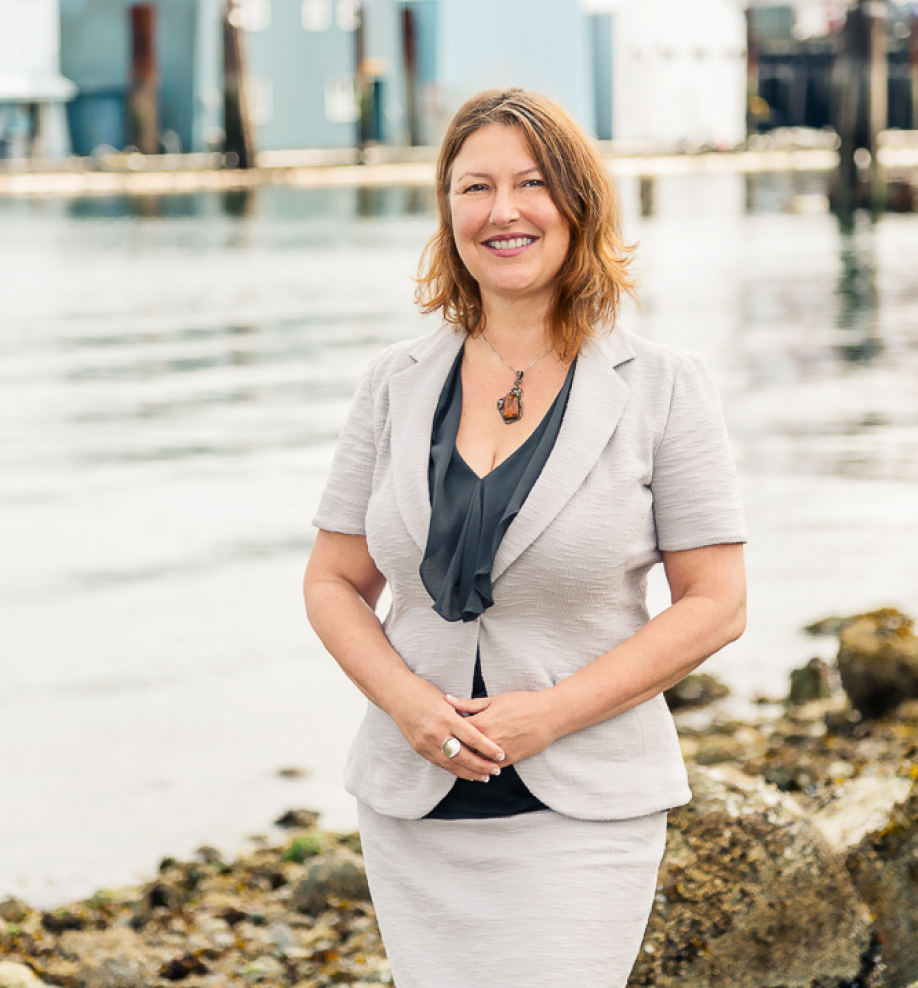
Michelle Barrial
Mike Marschausen
Dr Al Danenberg
iTunes | Google Play | Spotify, | Libsyn | iHeartRadio | Gaana | The Healers Cafe | Radio.com | and many more

FEATURED INTERVIEWS
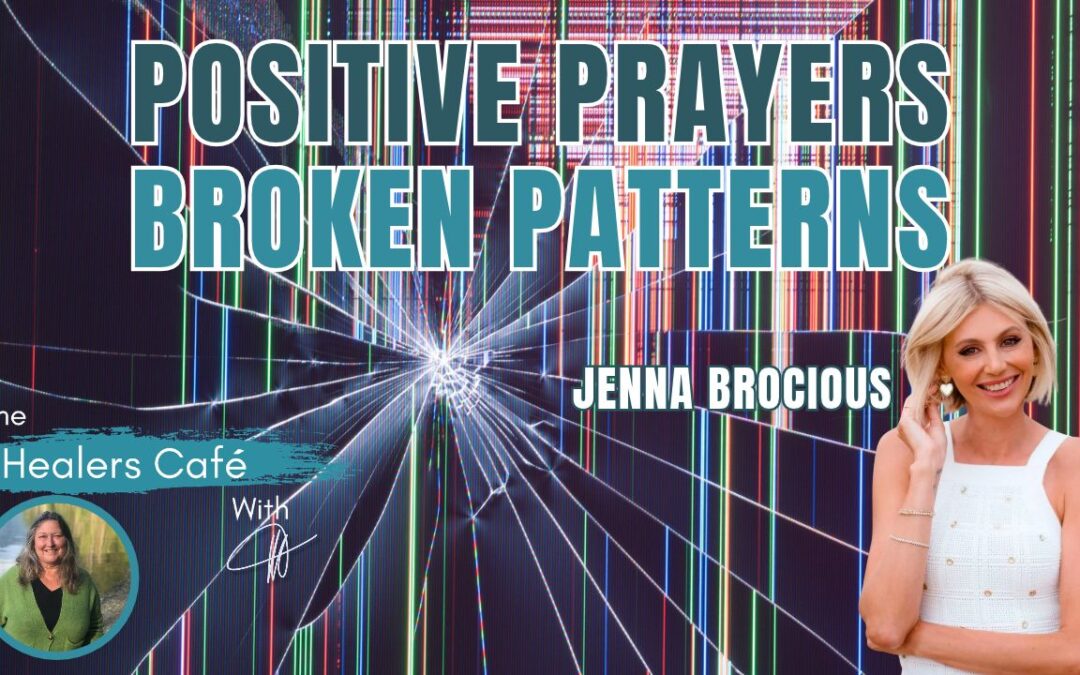
Jenna Brocious
Positive Prayers, Broken Patterns with Jenna Brocious & Manon on The Healers Café
In this episode of The Healers Café, Manon Bolliger, FCAH, RBHT (facilitator and retired naturopath with 30+ years of practice) speaks with Jenna Brocious described a nonlinear healing journey centered on breaking generational patterns, self-responsibility, and spreading love through writing and prayer cards.
Highlights from today’s episode include:
- Jenna consciously broke generational patterns of instability and alcoholism by choosing a loyal, consistent partner and creating a safe, loving home for her son.
Jenna teaches that healing is a personal responsibility—she forgave her mother without ever receiving an apology, recognizing that staying in resentment only keeps her in pain.
– – – – –
Manon: You emphasize that conventional medicine often manages disease rather than truly healing, and that real healing must include the physical, biological, and spiritual dimensions of a person.

ABOUT JENNA BROCIOUS
Jenna Brocious is originally from the Northwest and moved to Arizona at age 19. She loves the great weather and the opportunities to pursue an active outdoor lifestyle. She attended the University of Phoenix and earned a degree in business management, knowing she prefers to be her own boss.
Jenna is a wife, mother, creative, and entrepreneur. She has worn many hats while searching for her purpose outside the home. With a very supportive husband, Jenna has had the time and flexibility to deeply reflect on her true calling. In 2022, she launched her Etsy shop selling positive-intention prayer cards. In 2024, she completed her first book about her experiences with generational trauma. Jenna is also a big animal lover and has two goldendoodle dogs. She dreams of someday having her own mini farm.
Jenna enjoys participating in charity work and values giving back, having been a recipient of kindness in her younger years. She currently serves on the board of Folds of Honor.
Core purpose/passion: I believe my purpose is to help, heal, and spread love.
Here to help others, guide them to find their own healing, and then there is more room within yourself to love and spread more love to others.
ABOUT MANON BOLLIGER, FCAH, RBHT
As a recently De-Registered board-certified naturopathic physician & in practice since 1992, I’ve seen an average of 150 patients per week and have helped people ranging from rural farmers in Nova Scotia to stressed out CEOs in Toronto to tri-athletes here in Vancouver.
My resolve to educate, empower and engage people to take charge of their own health is evident in my best-selling books: ‘What Patients Don’t Say if Doctors Don’t Ask: The Mindful Patient-Doctor Relationship’ and ‘A Healer in Every Household: Simple Solutions for Stress’. I also teach BowenFirst™ Therapy through Bowen College and hold transformational workshops to achieve these goals.
So, when I share with you that LISTENING to Your body is a game changer in the healing process, I am speaking from expertise and direct experience”.
Mission: A Healer in Every Household!
For more great information to go to her weekly blog: http://bowencollege.com/blog.
For tips on health & healing go to: https://www.drmanonbolliger.com/tips
SOCIAL MEDIA:
– Linktr.ee | Rumble | Gettr | Facebook | Instagram | LinkedIn | YouTube | Twitter |
About The Healers Café:
Manon’s show is the #1 show for medical practitioners and holistic healers to have heart to heart conversations about their day to day lives.
Subscribe and review on your favourite platform:
iTunes | Google Play | Spotify | Libsyn | iHeartRadio | Gaana | The Healers Cafe | Radio.com | Medioq | Audacy |
Follow The Healers Café on FB: https://www.facebook.com/thehealerscafe
Remember to subscribe if you like our videos. Click the bell if you want to be one of the first people notified of a new release.
* De-Registered, revoked & retired naturopathic physician after 30 years of practice in healthcare. Now resourceful & resolved to share with you all the tools to take care of your health & vitality!
TRANSCRIPT
Introduction 00:00
Welcome to the Healers Cafe, the #1 show for medical practitioners and holistic healers to have heart to heart conversations about their day to day lives while sharing their expertise for improving your health and wellness.
Manon Bolliger 00:44
So welcome to the Healers Cafe, and today I have with me Jenna Brocious and she is a spiritual guide who has basically based her knowledge on many different experiences that have led her to her path. Originally, she was from the northwest, then moved to Arizona when she was quite young, 19. Went to University of Phoenix and realized that she would rather be an entrepreneur and have control over her, you know her her life in that sense. She’s also a mother. She’s a wife, and she has created an Etsy shop selling positive intention prayers, prayer cards. So I think that’s it for the intro. I want to jump right in. It didn’t take much to just explore how you know healing comes in so many forms. We have the you know the conventional medical paradigm, and some don’t call that healing. I would agree. It’s more like how to die or how to manage disease, but it’s really not much about healing at all. If we think about it, sometimes you keep things in a stagnant spot. Often, though, it really is part of the cause of your death and the accelerated death path. So, so as far as I’m concerned, I’m always looking at on all levels, physical, biological, but also spiritual, you know, paths that lead us to a healing. So that’s it. I’m going to pass it to you and welcome.
Jenna Brocious 02:43
Thank you so much. I appreciate being here today. It’s I enjoy sharing my story because it is not linear. It is ups and downs and roller coasters, and I think that’s real life. And it’s not always pretty, but here we are. And I agree that I think through my healing journey, I’ve also allowed myself to become more healthy and to become more loving because I had space to love more other people more. Yeah, the healing journey has been interesting. I really had the opportunity when I became a mother to realize I was holding my mom to an expectation she had never agreed to, and then when I became a mother myself. It just really bombarded me with feelings of how I don’t want to give my son the home environment that I was raised in, and I had to change that. And that change started with me. And my husband gave me the opportunity to stay at home and be a stay-at-home mom. So I would take my son to preschool, and I made a commitment to myself that I would sit on my office floor for six months, three times a week, and just sit in silence and journal and pray and meditate. And it really just opened up my eyes to all the answers I was looking for in the outside world were actually all within me, and so it just gave me the opportunity to really journal out all those things that I had maybe had stuck in my head and in my heart for so so long. Sorry,
Manon Bolliger 04:12
no, no, don’t apologize, but maybe share what what are you actually experiencing now as as you share all this,
Jenna Brocious 04:22
I think it’s the truth within me, and I there’s something that it makes me shaky right now. But just the healing process and the truth was really always there, and I was just running and hiding from
Manon Bolliger 04:40
- So, so, what did you feel like? You you mentioned your the expectations you held your mother, in which I think it’s it is always when we have our own kids that we go, oh, yikes, you know, maybe she did do the best she could with what she knew and what was available. And you know the intentions were there. You know it just it got translated differently. All of that, right? But when you’re you’re doing it yourself, you you’re acutely aware of of all of that. But is that the primary? Is that the the door into your healing journey, that particular, you know, I always find that there’s a door that opens up all the doors.
Jenna Brocious 05:31
Yes, actually, when I realized that I was holding her to an expectation that she didn’t agree to, I started to really sit with that, and then I started to sit with her mother and her childhood, and I really started to look at. She really did do the best that she could with what she was given, and she wasn’t given a lot.
Manon Bolliger 05:50
And
Jenna Brocious 05:51
so I really started to have empathy for her. I really started to like. I was able to like apologize and release and let it all go because I was being hard on her for absolutely no reason. Because once again, she did the best she could with what she had, and if she did not have an easy childhood by any means as well, and so I just really started to have that empathy and understand her better, and then it actually builded our relationship into a better relationship due to that happening.
Manon Bolliger 06:23
So, was your own …
Read more...
childhood a difficult one?
Jenna Brocious 06:28
Yes, I was raised by a single mother who was an alcoholic and had a revolving door of men. So, my life was constantly moving and changing. I really didn’t have a lot of safety or consistency in my childhood, so that’s something I seeked as an adult, and with my husband, who is the most consistent, loyal person I’ve ever met, and couldn’t have picked a better partner for me because that’s truly what I needed to feel grounded and safe as an adult.
Manon Bolliger 06:54
Yeah, it’s unusual that it goes that you know. Usually, you you kind of repeat the pattern.
Jenna Brocious 07:02
I wrote a whole book about not repeating the patterns that I had been raised in. My grandmother was a single mother,
Manon Bolliger 07:09
so
Jenna Brocious 07:10
just like I had to break these patterns for my son, so that my son has an opportunity to have a bigger and better loving life.
Manon Bolliger 07:17
So, so what? What? I mean, it sounds easy. Sure, we’ll break a pattern. You know, you’re aware of it. You don’t want to do it, but how did you break it? How did it really manifest in you to be able to break that pattern?
Jenna Brocious 07:35
I think just making different choices. I saw my mother. I say my mother taught me everything not to do in life, and I enjoy the contrast in that. But she really taught me everything not to do in life, and I saw a lot of things as a child that I was like, “That isn’t okay. That’s not how that should be. And so it was really just learning how to like become independent on my own, be able to take care of myself, be able to make rational decisions without just flying off the handle and being reactive. I was raised by a lot of reactive people, and so, and I also still to this day am working on that as well. But it was just seeing all the things that I knew weren’t okay. I had to change them for myself, and somehow by the grace of God, I have changed it. I’ve been married for 12 years now, and I have a very sweet husband that deals with a lot.
Manon Bolliger 08:30
Well, you know, I think people choose each other, right? At some level of consciousness, yeah. So there’s got to be something in it for him, as a growth factor too. You know, it’s not um, it’s not just a one way. It never is.
Jenna Brocious 08:49
No, and I’m definitely a very strong, independent woman, and he is a people pleaser. So we have worked on each other for sure. So I agree with you. It goes both ways.
Manon Bolliger 09:00
Yeah, yeah. So that’s a that’s interesting that you are not the the people pleaser.
Jenna Brocious 09:08
You know what? I realized in my early 20s that I was a people pleaser because I never wanted to go home because my home environment was so erratic that I would anything to stay at a friend’s house. So I would clean the house. I would do anything to not go home. So I have realized that being a people pleaser does not serve us. And my favorite, no. And I’m trying to teach my husband that
Manon Bolliger 09:33
one. Oh, okay, okay. So you went through it basically. Yeah,
Jenna Brocious 09:38
to acknowledge it.
Manon Bolliger 09:39
So you you mentioned at the beginning that you know there were ups and there were downs and there’s multitude of paths. Do you want to sort of take us through to when the path kind of led to your your vision of you know. Like there’s healing, and then suddenly, it’s like you are part of the the healers in in a sense, right? You’re able to bring that out so that other people get helped.
Jenna Brocious 10:14
Yeah, God laid it on my heart to write a book about my childhood, and I had always joked about how crazy it was. It’s a really fun story to read for somebody that didn’t have to live through it. And so I finally made the decision to write a book and really share all of the steps and all the journeys of my healing process. And even writing the book brought up all of those emotions I thought I had dealt with on the floor of my office years ago, and here I was dealing with them all over again, writing this book and realizing I only had two pictures with my dad when I was a baby because I started going through photos to try and put it all back together again, and it just reopened up all the things. But then it just gave me so much more wisdom and understanding and gratitude that I was just so blessed to be able to share that with other people because I think we all don’t open up enough, but if we were to open up more, we’d realize how much we all have in common.
Manon Bolliger 11:13
Right. Yeah, and and that part of humanity, you know, and because you say that in the end, it’s you know it’s love that connects things. Can you sort of expand from in your own kind of words what that is really about the essence of that statement?
Jenna Brocious 11:35
Well, my three were well, my words are help, heal, and spread love. And I think once I was able to help myself and heal. I was able to open up my heart so much more to more love, more love for my husband, and understanding more love for my child in a more playful, joyful way. It really just healing, and I think healing is such a personal responsibility that we all have to hold within ourselves. I had to forgive my mom, and she’s never apologized. She’ll never apologize. She’ll never admit, and that’s okay. But for my own self, I know that she is not proud of some of the things that have happened. But I accept her apology, and it was my own responsibility to move forward without ever having those conversations, and I think that’s such a big part of healing. Is our own? We have to take our own responsibility for it.
Manon Bolliger 12:30
Yeah. Well, I mean, the end. It’s it’s we’re the ones who suffer if we don’t, right? So, yeah. I mean, so for sure. But but there’s also like self love, right? Because in the in the terms of your relationship at the time with your mom, your self love would have been affected, right?
Jenna Brocious 12:56
Yes, I will say I have to admit I’ve always had God in my life. My mom used to take me to church and drop me off on my own, and I would be a little girl and go to church on Sunday by myself. So it’s such a funny, but so I think I’ve always had that like strength in His presence that my self worth really never suffered, which I find so interesting as a grown adult now and looking back on it, because I knew I was worthy, even though my surroundings did not show that.
Manon Bolliger 13:26
Interesting. Yeah, yeah, yeah. Because that’s that’s an obvious step that many people need to take, right? Is that you know? But you went straight to more loving to your husband, more loving to your son, and I was saying, but very interesting. Yeah. So tell us a little bit about the these prayer cards and what is it? What is praying in your mind?
Jenna Brocious 13:56
Well, I struggled during COVID because I felt like some of the prayers I were getting were like so doomsday, and the words were such a negative connotation, and I really didn’t like that. And so I just started writing positive prayers that had more uplifting words, better, more powerful statements, and a positive reflection. And so I just thought if I could make one person smile, or make them not feel alone, or elevate them to have a better mindset, then I, then I was doing my job. I was doing my work. That was from my heart, and that was me spreading love on a different level in a different way.
Manon Bolliger 14:37
So when you like, I mean, I can see the need for that, but so let’s say you’re Manon Bolliger here, and I want to thank you for taking actionable steps towards engaging your healing journey and helping others discover their path by watching, sharing, subscribing, and. Reviewing these podcasts, every review and share helps spread the word on these different perspectives and choices and options for healing. And to thank you, I’d like to invite you to sign up to my free seven sequence email tips on health and healing for everyday life. And you can go to healerscafe.com. tips. Thanks so much. You’re you’re writing cards for, let’s say, grandparent who’s stuck, you know, is rejected by their family because they they haven’t they decided not to take these shots or they’re not allowed to go visit them because the establishment has taken on the the belief that Fauci is the science Whatever. So, how could you? How do you pray in the in the positive way in a circumstance that you know so many people lost their loved ones without being able to say goodbye? You know, so many people died in hospitals due to protocols that were unsuitable. That’s the polite way of saying criminal. But yeah, so yeah, go ahead. Give us examples of how you transform from what what people would most likely say to to coming from a place of love and giving a positive feeling. Yeah.
Jenna Brocious 16:53
So there’s seven different prayer cards. There’s peace, love, happiness, worthiness, grief, and then travel. So there are different topics of cards, and I made them small enough that they kind of fit into your back pocket or a wallet. So if you’re feeling anxious and a little overwhelmed, it’s kind of something that you can just pull out. And it’s just five sentences. They’re very short and sweet and brief. But I just want you to like recalibrate yourself if you’re feeling that feeling. And so words carry intentions, and so I had the dictionary in front of me for weeks going over words and what did they mean because I wanted to be very intentional when I said immerse yourself in love, carry this positive vibe with you, and so here I’ll show you one of them. So this is my worthiness prayer card, and it says, “Dear God, help me find strength and love within myself. I know I am worthy of a healthy lifestyle, great love, and abundance. I am worthy of happiness. Anything I put my mind to, I can accomplish. I am a valuable person, and I am enough as I am. And I love that we can just give somebody something so sweet and little, but it also can shift that mindset if they’re having a hard time.
Manon Bolliger 18:13
Okay, so and how do you deal with the negative voice that exists in many people that says, “Well, that’s what I’m reading, but that’s just BS because I’m not worth. I’m not worthy.
Jenna Brocious 18:33
Right, that’s a hard one. I mean, we all have my. I have a mentor, and he called it the drunk monkey. Don’t let your drunk be talk to you,
Manon Bolliger 18:43
right?
Jenna Brocious 18:43
And I think that we all have that in us. It’s just, are you going to allow it to continue talking, or are we going to shift our mindset into something else? So I always suggest if we go down the drunk monkey hole, we got to pull ourselves back out, and then we just got to think of something positive. Is it the sunshine shining on your skin? Is it the breeze blowing on you? Is it the flowers that are across the street? Like, find something that can just bring you out of that little moment or that dark hole, because life isn’t always easy, and it can be really, really hard, and that’s okay. But we have to be able to pull ourselves out of it, and I hope that these cards kind of give people an opportunity to like, oh, I am worthy. Okay, let’s shift and let’s go for a walk or do something else or call a good friend. I just we got we can’t let ourselves sit there. We got to find a way to pull ourselves out, and so that was the intention behind these cards.
Manon Bolliger 19:36
Yeah, so you’re showing like, well, on some level, people know they’re worthy. On some level, I mean, the people who would buy the cards, right? Like you know, not everyone’s the train
Jenna Brocious 19:51
to train content.
Manon Bolliger 19:53
Yeah, yeah,
Jenna Brocious 19:54
yeah.
Manon Bolliger 19:55
And and so the sort of the lesson is the the the drunk thoughts. Or the what did what did he call
Jenna Brocious 20:02
them? The drunk monkey. The
Manon Bolliger 20:03
drunk monkey. Yeah, okay. Because there’s many ways of calling those thoughts, but it’s really not to pay, not to give them value, basically.
Jenna Brocious 20:14
Yeah, don’t give it attention more than we already have.
Manon Bolliger 20:16
Yeah, because in a sense they’re automatic. They’re continuous, and and as Byron Katie says, that’s their job, right? So they’re going to just keep coming, and so you can either keep paying attention and going downhill, or you choose a different path.
Jenna Brocious 20:35
Correct, and I do have to say, I feel like over time it has become easier and easier for me to have those positive thoughts, or to help out of that hole, because I just it’s it’s become like second nature for me to be like we’re not going here today. We’re gonna change the topic and move on.
Manon Bolliger 20:51
Yeah, yeah, yeah, yeah. I see it more like a chipmunk in a thing, and I’m like, oh, I’m not joining you. A little deal. Yep, yeah, we’ll go somewhere else. You know
Jenna Brocious 21:02
what I really found to help when I I have that hamster wheel going in my head if something bad happened or you know whatever it might have been. I find journaling that story in my mind out on a piece of paper really allows me to finally let go of it because then I’m not like having to remind myself of it anymore because I put it on paper and it exists somewhere, and I’m able to just move on.
Manon Bolliger 21:26
Right? Yeah, it’s interesting because I mean you’re also cementing it on one level because you’re committing to the story, and usually the stories change. You know, as we evolve and we change, we see it differently, etc. But um, but it’s true that it has a home. Then you know, it’s like, yeah, and you’re not because it’s true. We often remember details that we want to sort out, and then we find ourselves in that negative thinking pattern, right?
Jenna Brocious 21:58
Yes, 100%
Manon Bolliger 22:00
Yeah. So, what are the other subjects you have besides the worthiness, travel?
Jenna Brocious 22:08
I have a grief prayer card because let’s
Manon Bolliger 22:10
go with that one. I was going to say that
Jenna Brocious 22:13
a lot of loss that was happening, and I know it can be hard to have the words to pray when you’re so heartbroken.
Manon Bolliger 22:20
Yeah.
Jenna Brocious 22:20
And so it says, “Dear God, I pray. And there’s a blank for the name, and it says, “We’ll find peace and comfort in you on this journey of grief. Grief, God, please take away the pain and discomfort I feel in my heart with calmness and love. May the lost be saved by your salvation. Sorry, and the memories be sealed in our heart forever by your grace. We are all saved, and I think those are just-it’s a good prayer to have if you’re struggling and you do need that calmness and that serenity that is really hard to find sometimes. I just thought writing these cards with these words would give people a chance to relax and just focus on What matters,
Manon Bolliger 23:03
right? Right. Yeah, I wonder because I know you say sorry for the for the tears, but I wonder whether the tears are not part of the the emotional commitment to the statement. You know, because they they often say, the way the brain works is if you don’t feel it and you just read it, it doesn’t mean anything. Oh, I really like that. You actually have to feel it. So, with you still feeling it, it’s you’re still meaning it, right?
Jenna Brocious 23:41
Yeah. Five years later, I haven’t picked up a grief prayer card in a minute, and to have read that and have that emotion is still shocking to me. When I wrote these, I was sobbing at my dining room table
Manon Bolliger 23:53
writing, and then i I had to publish them and just let it go because they were never going to be perfect for me. But I had to, yeah, move on from that. Yeah, but I think that’s it because you know a lot of the putting things into manifestation, you know, you can’t just will it. You you’ve got to live it. You’ve got to see it. You got to believe it. You’ve got to experience it, even if it’s in your mind, because your your brain won’t know the difference between a dream or the truth, just like it can’t tell the difference between the past or the story. Which is why we’re you know it’s very hard to count on your memory, right? You know, even apparently to point out your murder, the murderer of somebody on the scene-you’re only 50% accurate. Like that is scary, right?
Jenna Brocious 24:48
Very interesting. What our brain allows and doesn’t allow.
Manon Bolliger 24:52
Yeah, you know. So I mean, that’s scary because somebody’s life is, you know, in your 50% judgment, right? Even if you intend the very best, that’s how not malleable, but how impressionable our mind is, right? But it, but yeah, if we work with emotions, since we have them, it works to our benefit.
Jenna Brocious 25:20
Yes, and I’d have to say on my healing journey, I feel like I’ve become more emotional as well. Maybe because I opened up those emotions, or I’ve opened up my heart a lot more. I just crying a little bit more, or just like in a moment of pure joy and happiness, I’ll cry for some reason I don’t know why, but my heart just like it Overwhelms me.
Manon Bolliger 25:41
I mean that just from a frequency resonance point of view, you’re living at a like at a more embracing of life level, right? You’re not fighting it. You’re just in it. Well, fighting it doesn’t
Jenna Brocious 25:58
get us anywhere. So we might as well just make the best of it, enjoy, love it, and surround ourselves with people that fill us up with love and joy, and are good and kind people to us.
Manon Bolliger 26:08
Right, right, yeah.
Jenna Brocious 26:10
I had to. I moved away when I was 19 from my hometown, and I knew if I didn’t get out when I was young, that I’d probably get stuck in the same patterns that everybody else did in my small town. So I big risk and moved to Arizona, and I don’t regret it because I’m such a different person that knows I’m so capable of overcoming so many things and
Manon Bolliger 26:32
stay
Jenna Brocious 26:33
on the other side.
Manon Bolliger 26:35
Well, so how old is your? It’s a son, right? Yeah, how old is Hina?
Jenna Brocious 26:42
He just turned 11. Time is no more time, almost. It’s wild.
Manon Bolliger 26:48
That’s funny. It’ll be funny when he hears this or reads your your cards, you know, with a with an adult’s eye. You know, it’ll be very interesting. Has he read them so far?
Jenna Brocious 27:03
He has read my cards. While I was writing the book, I was obviously sitting at my desk, sobbing, writing, getting my heart out on these pages. And he came over to me one day, and he’s like, “Am I in your book? And I’m like, “You’re the reason I wrote the book. You’re the reason. You are all the pure love that like
Manon Bolliger 27:22
built
Jenna Brocious 27:23
up this thing within me that I had to explode and get it out. So it’s all about him, and he’s the best thing that’s ever happened to me.
Manon Bolliger 27:31
And
Jenna Brocious 27:32
if it weren’t for him, I don’t know if I would have ever like truly healed from my childhood. So very grateful for that.
Manon Bolliger 27:38
Yes, interesting how things work. Yeah,
Jenna Brocious 27:42
one of the things I did in my book is I because it starts from childhood, obviously, till current day, and I broke down at the end of every chapter my own lessons that I learned from that time. So you might read that chapter and gain your own lessons, but I thought it was important because I find it interesting. Sometimes people can’t get the real lesson out of the story, and I wrote at the end of every chapter, kind of broke down the lessons that I learned, hoping that they would have to not learn them themselves and maybe read it and understand better.
Manon Bolliger 28:14
Right, right, fair enough. Okay, well, so do you have any sort of last comments to share, or where people could get these cards, or as our time is wrapping up here. So I just thought I’d leave it to you at this point.
Jenna Brocious 28:30
You’re so sweet. I would just say that if I can make it out, anybody can make it out. If you truly want to heal, anything is possible. You just have to give yourself that time, and giving yourself that time is the biggest treasure I think you can ever give yourself because it will open up such a new world for you. My book is called Not My Problem Anymore. It’s a generational pattern book about how I broke my grandmother and my mother’s story. You can find it on Amazon, and then I have my positive intention prayer cards. Those are on Etsy, and they also come with a little stone. So if you just want to carry the stone with you and rub the stone as a reminder for your prayer or your intention, I kind of really thought through the process, hoping to set people up for success.
Manon Bolliger 29:17
Great. Well, thank you very much for sharing your time with us, and I’m sure people will be in touch when they go to the podcast. You know, they there’ll be comments and any indications where to get hold of you as well.
Jenna Brocious 29:34
Perfect. Thank you.
Manon Bolliger 29:36
Okay. Thank you.
Ending
Thank you for joining us at the Healers Cafe. If you haven’t already done so, please like, comment and subscribe with notifications on as I post a new podcast every Wednesday with tons of useful information and tips for natural healing that you won’t want to miss, go to DrManonBolliger.com/tips for more tips

RECENT INTERVIEWS
Vita Oyler
Living With Chronic Pain: Gentle Steps Forward with Vita Oyler & Manon on The Healers CaféIn this episode of The Healers Café, Manon Bolliger, FCAH, RBHT (facilitator and retired naturopath with 30+ years of practice) speaks with Vita Oyler, a rehabilitation...
Dr Marina Straszak-Suri
Rethinking Fertility & Women’s Health with Dr Marina Straszak-Suri & Manon on The Healers CaféIn this episode of The Healers Café, Manon Bolliger, FCAH, RBHT (facilitator and retired naturopath with 30+ years of practice) speaks with Dr. Marina Stratsak-Suri, an...

Dr Jeff Fienmann
Holistic Pet Wellness with Homeopathy with Dr Jeff Fienman & Manon on The Healers CaféIn this episode of The Healers Café, Manon Bolliger, FCAH, RBHT (facilitator and retired naturopath with 30+ years of practice) speaks with Jeff Fienman, a veterinarian and molecular...
Cheryl Meyer2
From Toxic Overload to Self-Healing with Cheryl M Health Muse & Manon on The Healers CaféIn this episode of The Healers Café, Manon Bolliger, FCAH, RBHT (facilitator and retired naturopath with 30+ years of practice) speaks with Cheryl Meyer, known as Cheryl M Health...
Cheryl Meyer
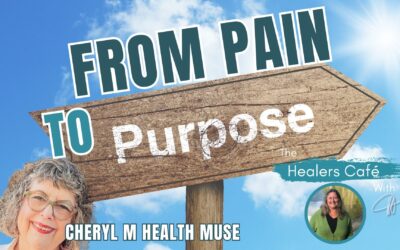
From Pain to Purpose: Cheryl M Health Muse & Manon on The Healers CaféIn this episode of The Healers Café, Manon Bolliger, FCAH, RBHT (facilitator and retired naturopath with 30+ years of practice) speaks with Cheryl Meyer, also known as Cheryl M Health Muse, shared...
Kumiko Kanayama
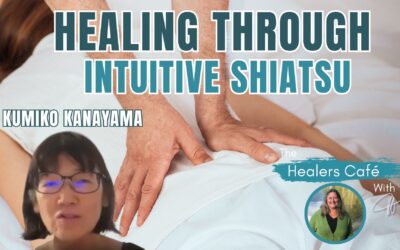
How to Use Shiatsu to Release Negative Energy in Your BodyIn this episode of The Healers Café, Manon Bolliger, FCAH, RBHT (facilitator and retired naturopath with 30+ years of practice) speaks with Kumiko Kanayama and using intuitive shiatsu to open energy centers and...
A Better Way To Connect With People
INTERVIEWS
WORTH THE MENTION